What Is a Website? Meaning, Types, Benefits & Examples (2026 Guide)
Have you ever searched for a business on Google and visited its online page to learn about its services, products, or contact details? That page is part of a website. Today, a website is one of the most important tools for individuals, businesses, schools, hospitals, and organizations to build an online presence.
Whether you run a small local shop or a growing company, having a website helps customers find you anytime, from anywhere. In this guide, you’ll learn what a website is, how it works, its different types, and why it has become essential in 2026.
What Is a Website?
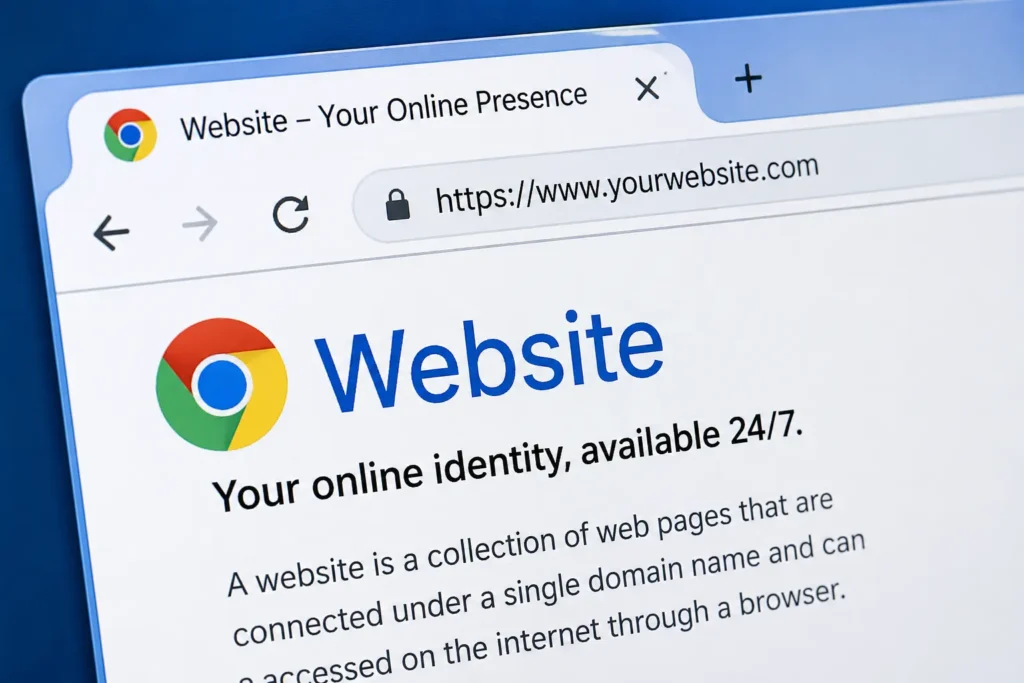
A website is a collection of web pages that are connected under a single domain name and can be accessed through the internet using a web browser like Google Chrome, Microsoft Edge, or Safari.
Think of a website as your digital office or online store. Just as a physical shop has an address where customers visit, a website has a unique web address (domain name) where people can find your business online.
For example:
- An online clothing store displays products and accepts orders.
- A hospital website provides doctor information and appointment booking.
- A school website shares admission details and important announcements.
- A real estate company showcases available properties and collects enquiries.
No matter the industry, a website makes information available 24 hours a day.
How Does a Website Work?
Every website relies on three essential components.
Domain Name
A domain name is the address people type into their browser, such as www.websitedad.com. It helps visitors reach your website easily.
Web Hosting
Hosting is the online space where your website files, images, and content are stored. Without hosting, your website cannot be viewed on the internet.
Web Browser
When someone enters your domain name into a browser, the browser retrieves your website from the hosting server and displays it on the visitor’s screen within seconds.
Together, these components allow people around the world to access your website anytime they need information about your business.
Types of Websites
Different businesses have different goals, so websites are designed accordingly.
Business Website
A business website introduces a company, its services, contact information, and customer testimonials.
E-commerce Website
These websites allow customers to browse products, add them to a cart, and make secure online payments.
Portfolio Website
Professionals such as photographers, designers, architects, and developers use portfolio websites to showcase their work.
Educational Website
Schools, colleges, coaching institutes, and online learning platforms use websites to provide educational resources and admissions information.
Blog Website
A blog focuses on publishing articles, guides, news, and helpful information on specific topics to educate readers and attract organic traffic.
Why Is a Website Important?
A website is more than just an online brochure. It plays a significant role in business growth and customer trust.
Builds Credibility
Most customers search online before choosing a company. A professional website creates confidence and shows that your business is genuine.
Available 24/7
Unlike a physical office, your website works around the clock, allowing visitors to learn about your services whenever it’s convenient for them.
Reaches More Customers
People can discover your business through search engines, making it easier to attract customers beyond your local area.
Supports Digital Marketing
Whether you invest in SEO, Google Ads, or social media marketing, a website acts as the destination where visitors learn more and take action.
Generates Business Enquiries
A contact form, phone number, WhatsApp button, or enquiry page allows potential customers to connect with you quickly.
Website vs Social Media
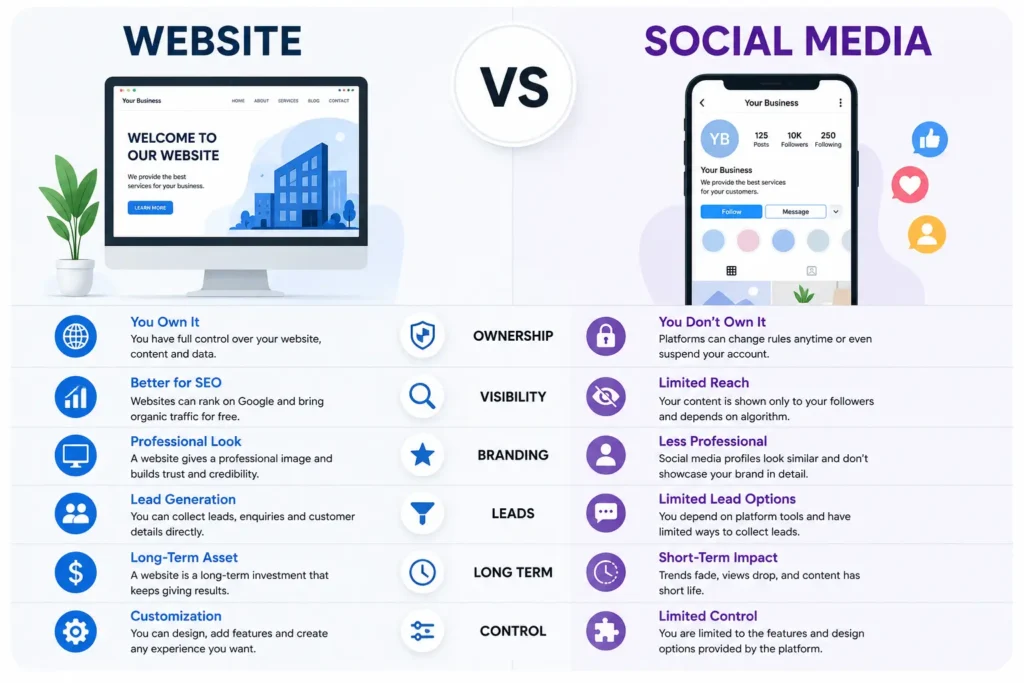
Many business owners believe that a Facebook or Instagram page is enough. While social media is valuable, it should complement your website rather than replace it.
| Website | Social Media |
|---|---|
| You own and control the content | Platform rules can change anytime |
| Helps rank on Google Search | Limited search visibility |
| Builds long-term credibility | Focuses on short-term engagement |
| Suitable for detailed business information | Limited customization |
| Supports lead generation and SEO | Depends on platform algorithms |
A website gives your business complete control over its online identity.
Real-Life Examples of Websites
You interact with websites almost every day without realizing it.
Examples include:
- Online shopping stores
- Hospital websites
- School and university portals
- Restaurant websites with online menus
- Real estate company websites
- Government service portals
- Travel booking platforms
Each website serves a different purpose but shares the same goal—providing information or services online.
Who Needs a Website?
Almost every profession can benefit from having a website.
Examples include:
- Small businesses
- Startups
- Doctors and hospitals
- Schools and coaching institutes
- Real estate agencies
- Restaurants and cafés
- Manufacturers
- Consultants
- Lawyers and accountants
- Freelancers
Even local businesses can attract more customers by establishing a strong online presence.
Conclusion
A website is no longer optional—it’s an essential part of building trust, reaching new customers, and growing a business in today’s digital world. It gives people a reliable place to learn about your products, services, and expertise while helping your business stay accessible 24/7.
Whether you’re starting a new business or expanding an existing one, investing in a professional website is one of the smartest decisions you can make. A well-designed website not only improves your online visibility but also creates lasting credibility and opens new opportunities for growth.
If you’re planning to build a business website, choosing the right strategy and development partner can make all the difference. Call 9999719330